Thursday, September 5, 2019

How Can Oceanographic Rental Equipment Help Your Survey?

You can rent all the equipment for an oceanographic survey, and you must ensure that you have taken a look at what your options are as you plan your next trip. You know the sort of work that you plan to do, and you need to get the equipment that works for that mission. You can order several different parts for the mission, and you can even ask to have some of them installed for you. You might have thought that everyone who shoved off to sea is using gear they spent millions of dollars on. This is not always the case. You can get affordable equipment that can be used on every mission you take to sea. Read which equipment can be rented as you prepare to collect data.

Can You Get An ROV?


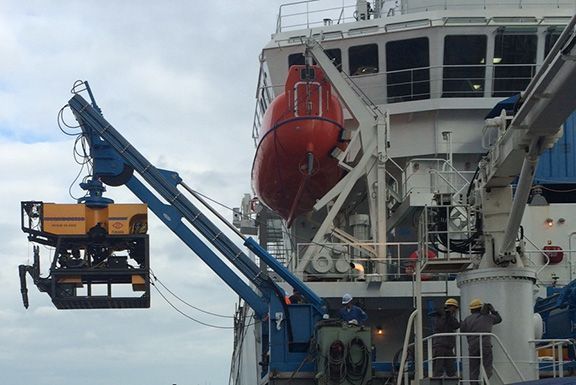
You can rent an ROV as part of your oceanographic rental equipment order. The ROV is likely the most expensive part of the package, but you do not need to buy it. You can also rent the cameras and lights that need to be used to record what happens beneath the surface. You can create a full complement of items that will ride with the ROV, and you can get a data cable that will attach to the other end of the device so that you can see the camera feed and any data picked up from sensors on the craft. When you have rented an ROV, you can begin to complete the rest of your order.

Sensors 


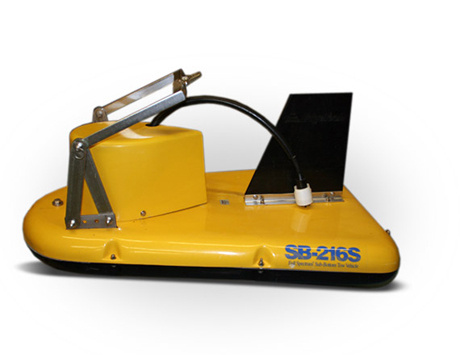
You can order sensors and acoustic releases for your survey, and you can build an array that will collect the data you want. It is much easier for you to manage these sensors because they are all connected to the data cable. You will have all the data come to your computer instantly, and you will not need to worry about losing your data because you are getting an instant feed.  You could request special acoustic releases that will help you measure distances and currents, and you can set up different types of sonar that will let you know what is on the ocean floor.

How Long Can You Rent Your Gear?


You can rent your research equipment for as long as you want. You have every opportunity to rent the things that you need, to save money, and to save time. You can rent something for a long period of time with a proper contract, and you can even return your equipment early if you have collected all the data you need. Ask the renter if they can extend your rental agreement even if you are at-sea, and ensure that you have an agreement with pricing that you understand.

Can You Rent Custom Gear?


Yes. You can rent custom gear that was built for your trip, and the renter will simply break that gear down and reuse it in the future. You might find a piece of custom gear that someone else ordered in the past, and you can rent that gear because it is precisely what you need. You have a wide range of options when you would like to invest in scientific survey equipment, and you may need to take some time looking through the range of items that have been collecting dust.

In Conclusion


You can rent your scientific survey equipment right now so that you can plan your next trip. You can have items installed on your boat, and you can rent custom gear that is perfect for your next mission. If you are not sure that you can spend a lot of money, it only makes sense that you would rent your gear to keep your team under budget.

Monday, August 12, 2019

How To Customize ROV Lights And Cameras With Your Tracking System?


Customizing the ROV lights, cameras, and underwater tracking for your latest survey is very important because each experiment, scientific team, and vessel are different.  You can order new units that will be made specifically for your next mission, or you could rent older units that will be fitted with the devices that you need. You also need to consider the price of all these things, and you can contact them. The company that makes these devices every day. Once you have ordered good equipment, your readings/measurements will be accurate.

Start With ROV Lights & Cameras

When you start a new scientific survey, you likely need to use an ROV that is going to go below the surface of the water, carry your cameras, lights, and even measurement gear that you need to use.  These cameras and lights are often the backbones of a survey that plans to see things below the surface. The lights can be rated for a certain depth, and the cameras can be attached to the computers on the vessel.

These devices are all connected to the vessel with a winch, and the data cable will send information back to the surface.  You also need to use an underwater tracking system to see your vessel, or make maps of the ocean floor, or to learn how far away the ROV had to roam.

Underwater Tracking Systems: What Do They Do?

Underwater tracking systems are designed to give you the position of your device regardless of where it is under the water. You get a position readout for the device, and you are given the depth for the device.  When you have information on where your ROV has gone, you will find that it is easier to pilot. Plus, you can leave markers on your map so that you can mark certain locations that might be of interest.

You can also use the tracking system to ensure that you know where your CTD array is.  These arrays can be pushed around by the current, and you do not want to lose track of them.  Plus, your tests might require that your array does not move at all. When this is the case, you can track the position of the array to ensure that it has not moved.  If someone is trying to learn about currents, they can check the positioning of their sensors, and you can leave cameras underwater that will observe marine life, allow you to mark their position, and ensure that you can return to these locations in the future.

Rental Or Purchase?

You can rent your equipment if you are on a small budget or do not intend to do these surveys again.  You can have some existing equipment modified to meet your needs, and you old take out the rental for just a few days.  If you are buying things like a CD array, an ROV, and a winch, you can have all these items installed on your boat as part of the purchase.  You could create a vessel that was meant just for these surveys, and you will find that you can go out much faster because you do not need to wait to have your gear installed a second time.

Conclusion

The ROV cameras and lights that you order are just one part of the oceanographic survey you plan to do.  You can order CTD arrays for these missions, and you could have a winch or data cable customized for the boat that will support your underwater tracking system.  This is the easiest way to prepare for your next scientific trip.

Monday, July 22, 2019

How To Order And Use ROVs And Cameras For Oceanographic Surveys

Your oceanographic survey must be outfitted with a number of different devices that will be used for measurements, recording, and exploration.  You may order these devices in advance of your journey, and you may attach all these devices to the vessel if needed.  These devices can be custom ordered to suit your mission, or you could rent all your devices for the trip because that is much more cost-effective for you.  Look at what you can buy for the mission, and you can begin planning a shopping list before your survey team is put together.
image

Find Remote Underwater ROV Lights & Camera Units

You need to find a Remote Underwater ROV Lights & Camera that will travel under the surface of the water with a set of lights and cameras.  There are lights that will give you visibility when you are at extreme depths, and you can run the cameras along with these lights so that you can see all the things that are under the sea.  There are a number of people who need to get multiple cameras to mount around their ROV, and there are different lights you can buy that work at different depths.  
The ROV that you order can be controlled from the boat by the people who are on the topside.  You can see a camera feed fro the ROV because you are attached to a winch, and you can get reading from all the other equipment that you have under the water.  There are several things you should try, and each of these systems can improve your overall measurements and experiment accuracy.  

What Are Sound Ocean Systems?

Sound Ocean Systems are simply sound beacon relays that you can use at any time to take measurements underwater.  You can use these systems to measure where your ROV is, or you could take measurements that include the measurements from your CTD array.  When you have one of these systems put together for the mission, you can attach them all the boat with the winch.  The cable that is attached to your winch will help you transfer data, and you will get instant readings from your devices. 

Rental Agreements

You can rent your equipment when needed, and you must ensure that you have gotten an agreement together that lasts the proper amount of time.  There are many people who would like to get a lease that only lasts a few days, and you also need to remember that you can get a lease that will last a long time because you need to go out more than one time during your trip.  Plus, you might need to extend your lease because you have more work to do that was not anticipated when the project started.  

Custom Gear

Custom gear can be created that will dive to a depth of 600 meters, and you can order custom CTD arrays that have all the different devices you need to be attached to it.  There are a lot of people who would like to order custom gear because they need an ROV that is much smaller, special cameras, or lights that are just strong enough to work when you are at these extreme depths.  There are so many items that you can order custom, and you can have the CTD put together that includes all the measuring devices that you need.  

A Last Thought

There are several things that you can do when you would like to invest in the survey that you have just planned.  You can go out on the water with all the things that you have ordered, and you can take accurate measurements that will be used for your next scientific survey or trip.

Monday, June 10, 2019

Know The Basics Of Offshore & Marine Rental Equipment


A sea is a beautiful place that can be filled with adventure and freedom. It is also a dangerous and undisciplined place. It would be crazy to go sailing with the right equipment. You are going to need all the benefits you can get to survive in treacherous waters.

Previously, sailors and travelers were not equipped with the best Oceanographic & Marine Rental Equipment. They managed with simple and traditional tools like the astrolabe, the quadrants, the chronometer and the magnetic compass of a marine. Ancient practices even include observing cosmic bodies to determine location and destination. Navigation is almost always difficult with unpredictable and varied sea conditions. Imagine how man traveled by boat or boat without extremely reliable tools. It must be common for accidents to occur during these periods.

Marine shipping continues to progress for the better because of advances in marine technology and government efforts to reduce the number of accidents. The law requires owners and operators of vessels and boats to comply with safety instructions, mandatory training, equipment requirements, and operating standards. In addition, an increasing number of marine tools are invented, manufactured and sold on the market to improve marine practices and increase safety.


There is so much to say about the progress we have made over the past centuries. The old maps made the sea voyage a journey in the fog. GPS systems mean that you will never be sure of your position. The latest developments make it almost possible to position live so you can always plan the right route. Just look at the latest expanses of Bushnell. They make it easy to spot objects that are far away while resisting marine life. So consider electronics. Boating has always been a dangerous business in the past, as assistance was almost non-existent unless it was in busy waters. Now, if you have problems, you can use your ship's radio to contact the Coast Guard and arrange your own rescue. You can even have your exact location from the ship's GPS. What do you want more secure?

Rather then a rotating propeller, the Acoustic Doppler Current Profiler (ADCP) - like dolphins and bats - uses sound to explore its environment. Running underwater, this method works like handheld radars used by police to catch speeding motorists. The ADCP emits a burst of sound along beams inclined downward. The echoes are returned because of the dispersion of the particles carried by the currents of water. A second burst can be used to track movements on the seabed.

All these developments have been made for a reason. They help keep sailors alive. The latest advances in the field facilitate navigation and survival by moving away from civilization on the great blue waters of the world.

Today, sailors are very lucky to be able to count on many navigations instruments and Scientific Research Equipment useful and beneficial for their sea trips, whether personal or professional. More manageable operation and control of the boat help to increase the safety of each passenger.

Monday, May 27, 2019

Why Do You Need Custom-Designed Research Equipment?


Custom-designed Scientific Research Equipment is needed every time a group of scientists wants to go to sea.  There are standard pieces that every team needs to use, and these researchers know what they need when planning for their trip out to sea.  Selecting equipment should be much simpler than choosing from a catalog. Mass-produced items are often not appropriate for a scientific survey, but having something built for the survey could make a very big difference.  Learn how to purchase custom gear before untying the boat for a look at the deep sea.

The Survey Equipment

CTD & sonar winch products are needed on every boat.  Those new to the marine research world might not know that CTD stands for conductivity, temperature, and depth.  These are very special arrays that are used to test everything from the salinity of the water to the depth of the probe.  Water temperature affects the whole of the research survey, and these instruments are lowered in a special grid that holds them all together.  

These units are made in much the same way a chandelier would be made.  Each piece of testing equipment is attached in its own spot, and these instruments do not interfere with each other during the survey.  This gear must be lowered into the water, and a winch may be built just for this purpose.

Sonar Winches

A sonar winch is designed to drop down a sonar beacon, to hold the units that were built for the survey, or to pull back an ROV.  A remote operated underwater vehicle is often used to dive to extreme depths so that drivers are not put at risk. These are much cheaper to operate because they do not put human lives at risk, and they can carry heavy-duty lights that give a much better look at what is happening when there is almost no light deep below the surface.  

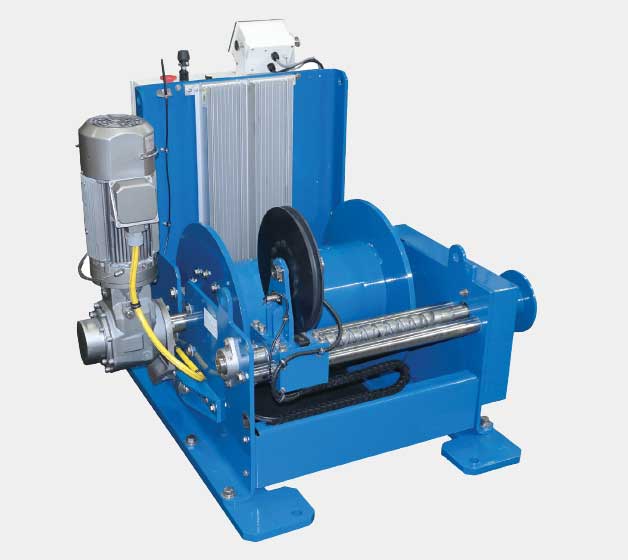
The sonar winch that is built for a survey is designed to hold a certain weight, will not rust and has a weight rating that is easy to understand.  The crew on the boat can easily pull back anything that is attached to the winch cable, and the unit runs quieter than older devices.

Ordering An Array Of Equipment


Scientists often need to order an array of gear that will be used for their next survey.  The winch and CTD array can be made by the same company, and the lab may order an ROV that will drive deep below the surface.  These devices are designed with durable parts, and they have massive ROV lights attached that have the proper lumen rating. A large equipment order is much easier to place when the team knows precisely what they need.  

Any a team that would like to order new equipment may place an order before they arrive at the shore, and that equipment can be delivered directly to their vessel.  The CTD & Sonar Winches gear are designed to stand the test of time as it is dunked under the water over and over. Stainless steel parts and other advanced products are used to create equipment that these crews may use over and over for many years to come.  

When new gear is created for the survey it is tested for weight, tested to ensure the wiring is secure, and power sources are checked for durability.  The array has a depth rating, and that depth rating will ensure the scientists are getting accurate readings. When scientists need something that will go deeper, they need to order another array that is made just for that purpose.  Also, the proper lights are attached so that underwater cameras can pick up images at extreme depths.


Monday, May 13, 2019

Importance Of Oceanographic Equipment And Launch & Recovery System


a68a655fb939e2c6cb499a1640be2760
The ROV is very sophisticated and expensive equipment. Although it is designed to work under difficult conditions underwater, it still needs to be handled with care. The Launch and Recovery System works just as its name suggests: it allows the ROV to be safely launched into the water without tangling cables and other potential sources of damage, and then to return it safely once mission completed. Launch and recovery are the two most important elements of an ROV mission. If problems arise not only if the ROV is not able to do its job, it can be damaged or even, in the worst case, lost.
All Okeanus launch and recovery systems (LARS) are designed to maximize productivity, ensure long, reliable service life and minimize operational costs. This is achieved through its robust design and high-quality construction.

With precise control and increased operability for Launch and recovery

bbdd9bab523659f72e79235cef0a8565_M
Okeanus systems are the result of rigorous technical design and practical knowledge gained from experience in the most challenging conditions. We provide easy-to-use systems that enable precise and efficient control of launch and recovery operations.
Our bespoke LARS offer increased flexibility and operability. For example, IHC can facilitate a wide angle link that extends the A-frame between 0 to 160 degrees. This is achieved by using a single set of hydraulic cylinders, passive stabilization frames for the deployment of plows and active damping units for recovery of underwater vehicles.
Okeanus launch and recovery system (LARS) transfers lifting power to a double mast-mounted secure tractor curve and complements the system with secure dual-corner slides that act as parking brakes and/or emergency stop brakes. The relatively small cathead on the mast eliminates the need for heavy and heavy winches.
Placing the lifting force in a relatively small headboard on the mast allows the cable to be wound under low tension on the reel. The lower tension reel does not require a grooved drum or a heavy duty frame and drive, which increases the service life of the reel. Low voltage winding allows you to replace the cable on board, eliminating the need for costly cable tension equipment. In addition, this eliminates the pinching of the cable on the reel, which allows your launch and recovery system to support different loads, increasing the flexibility of the system.
A series of CTD & Sonar winch in a water column influences the accuracy of sonar readings. To be as precise as possible, they must be calibrated according to the exact conditions. A new submarine winch system equipped with CTD sensors will measure conditions every 30 minutes and transmit these readings to land-based computers to maintain sonar data quality.
pexels-photo-906982
At any predefined interval range, you will be capable of launching and recovering a wide range of underwater oceanographic equipment with our underwater CTD & Sonar winch to provide regular water column data via fiber communication link optics onshore. Based on extensive experience in winch systems and underwater technology, the underwater winch is designed to be robust and reliable for a long life.

Thursday, May 9, 2019

Okeanus: An Overview Of Ocean Technology


The ocean is a beautiful place for us to see water, but there are so many forms of water life in it that we often don't think about. Some of them are very small and others are very large. Thanks to various forms of Marine Scientific Equipment & technology, we can see it and understand more about them.

Many ecosystems in the ocean each play their roles for the survival of others as a whole. Being able to observe them and record them on film is important. This allows researchers to identify the location of certain species. This also helps them to evaluate the danger to their ecosystem.

The term underwater is what is used to refer to various forms of equipment that allow people to explore the ocean. There is so much activity all the time under the surface. Individuals who pursue a degree in marine biology learn how to use various items. This allows them to have easy access to the things they need to explore.


The creation of underwater items ensures that we can learn more about water life. These items are carefully designed for the safety of those who use them, the water environment, and to help ensure that they will not cause any damage to the sea when they have been used.

The use of ROV Lights & Cameras allows for still images of various forms of water life. Such cameras are very flexible and will not be damaged by water. If you go snorkeling it's something you have to get. You can buy a low-cost underwater camera at a reasonable price. That can allow you to enhance the memories you bring home from that vacation.

The use of underwater videos and umbilical winch also makes it possible to make full-length documentaries. This type of ocean technology is very important because it allows taping to be carried out even in dark areas deep in the ocean. This also allows for ship recordings that are still left to be explored in the film.


Subsea Technology is a field that is highly specialized in meeting demands in terms of engineering including simulation. Most are located far below the waters and are collectively known as deepwater systems. Progress underwater technology is quite narrow because of the strict requirements to verify many of its systemic functions. Compliance is also a difficult rule to follow because many are determined. Difficulties are caused by the expensive costs of time-consuming changes in the old system because of the special vessels and equipment used on the ship.

Everything will remain impossible without ships and other types of ships to take us to the sea. We do need transportation, but have you ever thought of the small details on the boat you boarded? There are machines like Umbilical Winch installed and none of them are accessories. They are needed to keep the ship working at optimal levels. Because they are only machines and not humans, technicians must take care of things for safety purposes. These are all covered in marine technology. Someone must take care of good points.